
Safe and Effective Best Exercises for Osteoporosis in Seniors
Key Takeaway
For seniors with osteoporosis, consistent low-impact exercise helps strengthen bones, improve balance, and prevent falls. Activities like brisk walking, sit-to-stand movements, hip extensions, bridges, light weight training, and gentle yoga poses support bone density and stability. Always start slowly, use proper form, and consult a physician before beginning. Regular movement reduces fracture risk, enhances confidence, and helps older adults stay active and independent longer.
Nearly 10 million Americans, many over 65, live with osteoporosis today. You can lose bone from aging, hormones, medicines, or long-term inactivity. It hits women more, yet older men face it too. When bones thin, you may fear bending, walking, or living alone.
In that moment, you need to build bone and stop falls. Exercise makes muscles stronger, steadies your steps, and reduces falls. Studies show that balance, strength, and resistance plans lower the risk of falls by over 60%.
So, which are the best exercises for osteoporosis you should try to do daily to stay steady? This guide shares effective options for osteoporosis in U.S. seniors.
Benefits of exercise for osteoporosis in seniors
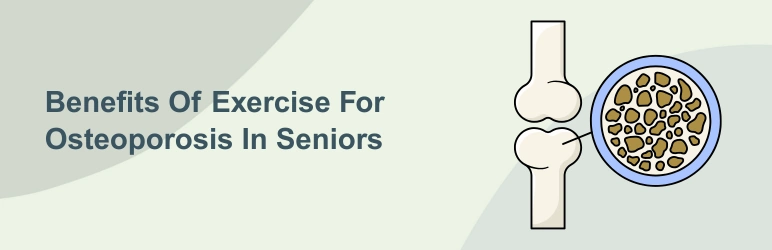
Regular movement helps bones, joints, and balance in clear ways. You also feel more steady doing daily things. So, here’s how exercise helps in seniors suffering from osteoporosis.
● Builds bone strength: Applying regular, consistent physical stress to bones tells them to grow, not shrink, over time. So, short, steady exercise helps more than rare hard days.
● Improves balance: Practice balancing exercises, and your feet will react faster on bad ground. That quick step can stop a fall.
● Protects joints: Strong muscles guard the hips, knees, and spine of the elderly during slips. They act like soft armor for everyday life.
● Boosts confidence: Moving without fear changes how you walk and turn. Confidence itself lowers fall risk, which is a huge benefit.
● Supports independence: Better strength obtained from regular exercise means easier stairs, beds, and grocery bags, even in your aging years.
● Helps posture: Posture-based exercises spread force across the spine, not one spot. That eases back pain and reduces fracture risk.
● Aids mood and sleep: Light exercise calms stress and improves rest. Good sleep supports bone health, too.
● Enhances heart health: Brisk walks raise heart strength without heavy strain. Your energy for errands goes up, for example.
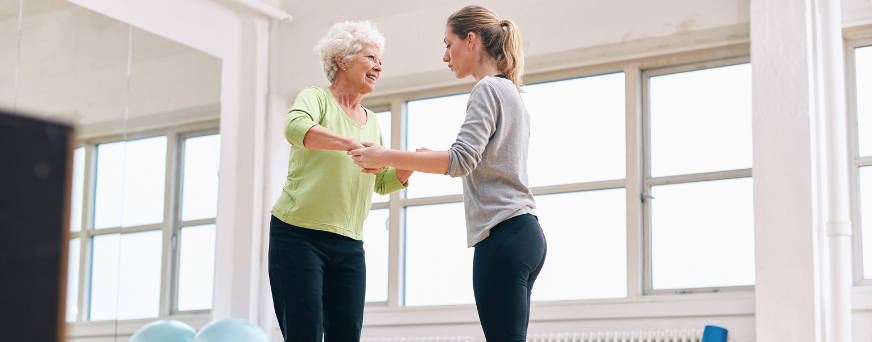
Start slowly and stay consistent. Check with your physician if you have had recent fractures. In the United States, many senior centers run gentle strength classes.
Most Effective Exercises for Osteoporosis in Seniors
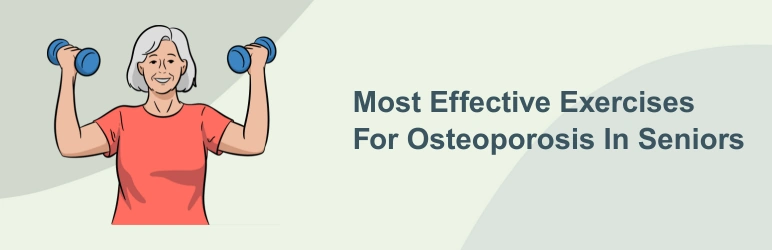
Some of the safe, effective exercises for osteoporosis in older adults are as follows:
Brisk walking
Walk slowly so as to elevate your heart. Select flat pavement or park loops that have good lighting. Put on supportive, senior-friendly high-heel shoes. Start with ten minutes and increase to thirty days most of the time.
Swing your arms low, not high, to relax your shoulders. Keep your eyes ten feet ahead to scan for cracks. On the other hand, avoid steep hills if your balance feels shaky. Add short, faster bursts for thirty seconds, then return to normal. Those bursts gently load bones, especially in the hips.
Sit-to-stand from a chair
This exercise trains the aging legs for daily life, like getting on and off sofas and cars. Pick a sturdy chair without wheels and place it against a wall. Sit tall, feet under knees, and lean slightly forward. Press through heels and stand without using hands if possible.
Press your hips against the chair and stand up straight and even. Attempt two to ten reps in sets with a break between sets. Use the arms of the chair to support oneself, should it be necessary.
Lower slowly; that slow part builds strong, smart muscles. However, stop if you feel sharp knee pain. Add a small backpack later for extra challenge.
Hip extension
Hip extension strengthens the back part, which is useful in pushing the legs to move and climb the stair. Hold lightly and stand straight and facing a counter. Hold your stomach in to cushion your lower back. Slide one leg straight back without bending the knee.
Keep toes pointing forward and avoid arching your spine. Return with control and switch sides after ten slow reps. Do two sets per leg, resting as needed. You can also add a light ankle weight for more load.
Light dumbbells
Light weights are used to maintain the bodies of aged persons with osteoporosis in terms of strength of the arms, shoulders and the upper back. Spend two to five pounds in the beginning, perhaps three. Stand erectly and grasp one dumbbell on each hand. Bicep curls, followed by presses at chest height.
Try lifting rows slightly and pulling your elbows behind. Keep movements slow, breathe steadily and keep shoulders silent. The goal is to achieve between eight and twelve reps in two sets.
Work one minute between sets, longer in case you are out of breath. When lifting, avoid twisting in order to preserve the spine. In addition, the weights should be held close to your body. Add weight when final reps become comfortable.
Bridge
The bridge helps your hips and keeps your back safe when performing your daily chores. Lie back, and keep your knees bent as hip-width apart. Down on heels of the press, squeeze glutes to push hips. Remain relaxed with ribs, chin, and shoulders resting on the floor.
Hold two seconds at the top, then lower slowly. Try two sets of eight to twelve clean reps. If your hamstrings cramp, move your feet closer to your hips.
Place a small pillow between your knees for better alignment. However, skip the bridge if lying down hurts your spine. Over time, add a mini band above the knees for a challenge.
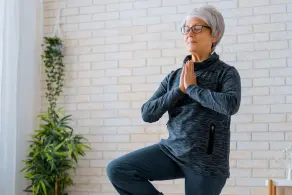
Standing yoga poses
Simple standing poses build balance in seniors and facilitate calm breathing. Mountain pose teaches tall posture and grounded feet. Tree pose trains ankle strength and hip stability. Warrior poses teach strong legs and steady eyes. Stand near a counter for a light fingertip spot.
Hold each pose for twenty to thirty seconds per side. Focus on a stable inhale and a longer exhale. That longer exhale helps calm nerves during wobbles.
In addition, spread your toes to wake the foot muscles. However, avoid deep forward bends that round the back sharply. Gentle twists are fine if the spine stays long and supported.
Conclusion
You finish strong by choosing safe, proven exercises for fragile bones in your aging years. You build steadier steps, fewer slips, and more everyday confidence.
However, before trying any exercise, check with your physician, wear good shoes, and start small, always. These best exercises for osteoporosis will help you stay active across U.S. parks, sidewalks, and senior community centers, while letting your bones strengthen quietly.
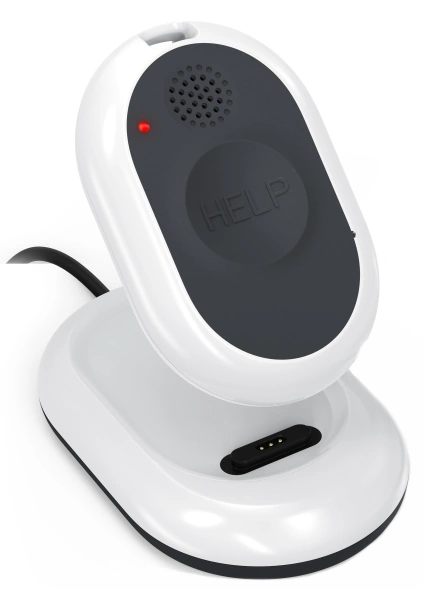
 Get Help With The Push Of A Button









 CALL 1-800-201-1283